

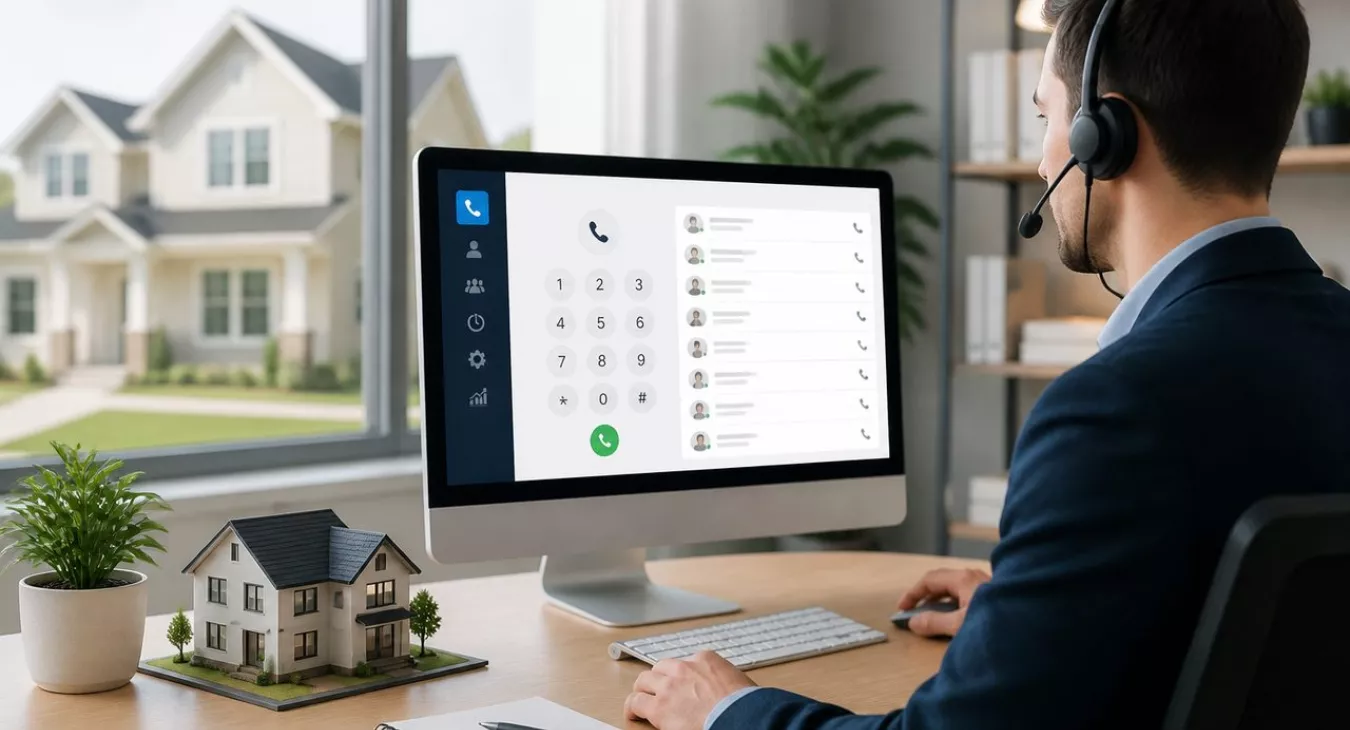
Discover how a batch dialer for real estate speeds up prospecting. Automate calls, reach more leads, and close deals faster with proven power calling strat
Products and Tools Mentioned in this Post
BatchDialer
BatchDialer is a power dialing platform designed for real estate investors. Streamline cold calling, manage leads, and boost productivity with automation.
Contactually
Contactually is a real-estate-ready CRM with list building, skip tracing, calling, texting, automated follow-up, project management and websites under one login.
Table of Contents
- What's a Batch Dialer for Real Estate?
- Benefits of Batch Dialers for Real Estate Professionals
- Top Batch Dialer Solutions for Real Estate
- How Batch Dialers Work in Real Estate Operations
- Compliance and Legal Considerations
- Real Estate Batch Dialer Best Practices
- Implementation and ROI Considerations
- Conclusion
- Frequently Asked Questions
You're leaving money on the table if you're still dialing phone numbers one at a time. Here's the reality: the average prospect needs 6–8 contact attempts before you actually reach them live. And the industry's dial-to-appointment conversion rate? A pathetic 1.7%. That only pencils out when you're moving volume. A batch dialer for real estate fixes this. It dials multiple lines at once, logs everything automatically, and gets you talking to actual decision-makers instead of fighting through voicemail hell. No more wasted time on dead air. This guide walks you through the entire operation — how these tools actually work, which platforms are worth your money, what the regulators care about, and how to structure a calling machine that closes deals.
New to finding deals? Start with our Guide to Finding Motivated Sellers.

What's a Batch Dialer for Real Estate?
Definition and Core Functionality
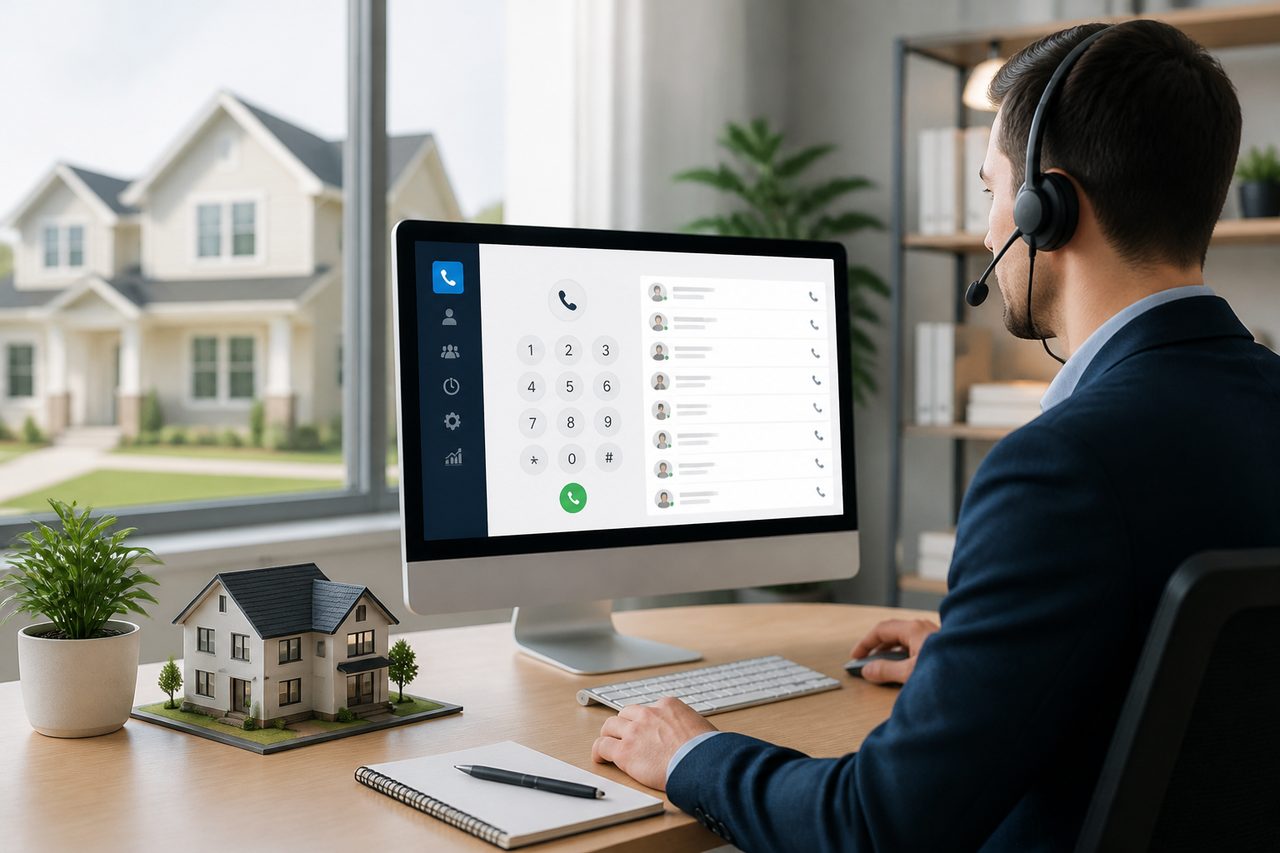
A batch dialer is software that makes outbound calls to a big list of contacts automatically. Here's the key difference: it only connects your agent when someone actually picks up. No more wasting time dialing manually, listening to rings, or trudging through voicemails. You get bridged straight to live answers instead. Most systems dial three to five lines at once per agent — which means you're stacking way more conversations into every hour you're on the phone.
Real estate investors use batch dialers for cold calling motivated sellers. Following up on online ad leads. Prospecting expired listings, FSBOs, absentee-owner campaigns. You name it. What used to take a full workday of grinding now happens in a focused two-hour power session.
How Batch Dialers Differ from Traditional Phone Systems

With a standard phone — even a VoIP desk phone — you're doing manual labor on every single call. Dial. Wait. Leave a voicemail. Move on. A batch dialer strips out every wasted second between conversations. Voicemails drop automatically with your pre-recorded message. Dead numbers get flagged and skipped. The next live answer is already ringing before you've even finished your notes from the last call. Want proof? Agents targeting 80–120 dials per day yielding 6–12 live conversations can actually hit those numbers in 1.5–2 hours. Try doing that with manual dialing.
Key Components of Real Estate Batch Dialers
- Multi-line dialing engine: Dials 3–5 lines per agent concurrently to maximize connect rates.
- Voicemail drop: Pre-recorded messages delivered automatically so agents never manually leave a voicemail.
- CRM integration: Syncs call outcomes, recordings, and notes directly into your lead management system.
- DNC scrubbing: Automated filtering against the National do not Call Registry and internal opt-out lists.
- Call recording and analytics: Captures every call and surfaces performance metrics for coaching and compliance.
- Local presence dialing: Displays a local area code to improve answer rates.
Benefits of Batch Dialers for Real Estate Professionals

Increased Productivity and Call Volume
Here's the thing: manual dialing and batch dialers aren't even in the same league when it comes to productivity. Agents who consistently hit 100+ calls per day through cold calling are looking at roughly 18 closings per year from that channel alone. You can't sustain that without automation. Top performers are pulling 5%+ dial-to-appointment rates — way above the 1.7% average — and that gap exists because they're dialing consistently, day after day. Batch dialers make that possible.
Improved Lead Follow-up and Conversion
Deals don't close on the first call. They close during the follow-up. Batch dialers automate the grunt work: no answer? The system reschedules automatically at your next window. Build this into a solid CRM integration, and you've got multi-touch sequences running on their own. Your pipeline stays warm. No agent has to remember who needs a callback tomorrow. And if you want to dial in your messaging, check out our cold calling scripts and best practices guide — it's purpose-built for real estate investors.
Cost Reduction Compared to Manual Dialing
Manual dialing costs money. A lot of it. Your caller spends hours doing busy work — waiting for rings, dealing with voicemails, staring at a phone. Batch dialers flip that. All the labor time goes toward actual conversations with real people. For acquisitions campaigns, that means lower cost per lead and faster ROI. No need to hire extra staff either.
Back to topTop Batch Dialer Solutions for Real Estate
Leading Platforms and Features
BatchDialer owns this space. It's purpose-built for real estate outreach, but you've got solid alternatives if you want to shop around. The company just restructured its entire pricing model on March 24, 2026 — a move designed to help growing teams actually scale without bleeding cash. Mojo Dialer's been in the game forever and still pulls in plenty of agent loyalty. Then there's ReadyMode (the new name for Xencall), which makes sense if you're running a high-volume call center operation. Want the full picture? Check out our deep dive on the best real estate dialers for cold calling in 2026.
| Platform | Entry-Level Price (Monthly) | Lines Per Agent | Real Estate Lead Lists | Call Recording Included | Notes |
|---|---|---|---|---|---|
| BatchDialer Basic | $139/agent/mo (or $111/agent/mo annual) | 3 | Add-on available | 90 days | Best for small-to-mid investor teams |
| BatchDialer Advanced | $299/agent/mo (or ~$239/agent/mo annual) | 5 | Add-on available; 60 numbers included | 365 days | Includes reputation management |
| Mojo Dialer (Single-Line) | $89/mo + $10/mo agent fee | 1 | No | Varies by plan | Popular with solo agents |
| Mojo Dialer (Triple-Line) | $139/mo + $10/mo agent fee | 3 | No | Varies by plan | Strong for listing agents |
| ReadyMode Starter | $199/user/mo | Multi-line | No | Yes | Better suited for larger call center ops |
| Contactually (by KDS) | See contactually.net | Calling included in platform | No (separate tools required) | Platform-dependent | All-in-one CRM with calling, texting, pipelines, workflows |
Transparency note: KDS (our parent company) helped build Contactually. This isn't the old Contactually CRM that Compass bought — it's a totally separate product. Pricing runs usage-based on top of whatever plan you pick. Head to contactually.net to see what you're actually paying.
Want specifics on what Mojo Dialer actually does? Read our Mojo Dialer review for 2026. And if you're overhauling your whole tech stack, our guide to best real estate software programs for every investor type saves you a ton of research time.
Lead List Add-Ons and Data
Here's where BatchDialer pulls ahead. They've got built-in lead list add-ons for FSBOs, vacant properties, and pre-foreclosures baked right in: $49/month for 2,500 leads, $79/month for 5,000 leads, and $119/month for 10,000 leads. Everyone else makes you bring your own data. Skip tracing, third-party list providers — you're DIY-ing your sourcing either way.
Back to topHow Batch Dialers Work in Real Estate Operations

Setup and Configuration Process
You're looking at one to three days to get up and running with a small team on most platforms. Create your account. Provision phone numbers — local or toll-free, depending on your market. Upload your lead list in CSV format. Then configure the essentials: lines per agent, call hours, voicemail drop recording settings. Run a test campaign before going live. Most platforms hold your hand through onboarding with video tutorials and live chat support, so you won't be figuring this out in a vacuum.
Lead List Management and Upload

Your list quality directly affects your call outcomes. That's not negotiable. Before you upload anything, scrub it against the National Do Not Call Registry — the FTC requires this every 31 days. Strip out duplicates. Validate phone number formats. Segment by property type or lead source. Why? Because targeted campaigns outperform spray-and-pray dialing every time, and you'll actually know which segments are converting. For investors pulling lists from public records and MLS data, our resources on best real estate wholesaling software for 2026 and best real estate comps tools will save you hours.
Call Routing and Distribution Logic
In a team, batch dialers handle real-time distribution to available agents. A live answer connects, and the system routes it to the next free agent instantly. No agents available? The call drops or plays a hold message. This is where team size matters. Not enough concurrent agents running? You're wasting connects and money. Most platforms let you set priority routing so your best leads hit your best closers — which actually moves deals.
CRM Integration
Here's the thing: a batch dialer by itself is only half the battle. Deep CRM integration is what separates noise from signal. Every call outcome — answered, voicemail, no answer, callback requested — logs automatically. Follow-up tasks generate themselves. Recordings attach to the contact record. Platforms like BatchDialer integrate natively with several investor CRMs. And if you're shopping for the CRM piece of this stack, our guide to AI-powered real estate CRM software digs into the top options in detail.
Back to topCompliance and Legal Considerations

TCPA and Do-Not-Call Regulations
Here's the truth: compliance isn't a suggestion. The penalties are brutal and real. Every illegal call or text under the TCPA hits you with a baseline $500 per violation. Willful or knowing violations? That jumps to $1,500 per violation. And we're not talking about hypothetical scenarios — TCPA class-action settlements averaged $6.6 million in 2024–2025. Dial someone on the National Do Not Call Registry and you're looking at $53,088 per call as of the FTC's January 2025 inflation adjustment. These fines are actively enforced.
The law says you can only call between 8 a.m. – 9 p.m. in the recipient's local time zone. But here's the catch — many states have narrower windows. Check your state's rules before you set campaign hours. You've also got to scrub your lists against the Do Not Call Registry every 31 days. Most quality batch dialers do this automatically. Just verify it's actually turned on in your account.
Key 2025–2026 Regulatory Updates
Two major changes hit real estate callers right now. The first one matters immediately. New opt-out rules took effect April 11, 2025 and require you to let consumers revoke consent through any reasonable method — and you've got to honor that within 10 business days. Second, the FCC's 1-to-1 consent rule for automated dialing systems has been delayed pending litigation following an 11th Circuit ruling in January 2025, so it's not being enforced right now. Don't get comfortable though — that status could flip. Talk to a qualified attorney and stay in the loop.
The Past-Client Exemption
Here's your loophole. If you've done business with someone in the past, you can still call them for up to 18 months from the date of your last transaction — even if they're on the Do Not Call Registry. No new written consent required. Just document that transaction date. Get sloppy with your records and this exemption disappears fast.
Recording Consent
State-by-state variation kills a lot of deals here. Federal law operates on one-party consent — meaning you can record if you're on the call and you know it's happening. Roughly a dozen states flip the script and demand all-party consent, also called two-party consent. That means you must tell the prospect the call's being recorded before you start talking. California, Florida, Illinois, and Washington? They're all two-party states. The safest move is disclosing at the start of every single call, regardless of where you're calling. Your batch dialer isn't your legal shield — it's just a tool. Get advice from a real attorney before you scale up campaigns. Don't skip this step.
Back to topReal Estate Batch Dialer Best Practices
Optimal Call Timing and Frequency
You've got a federal window: 8 a.m. – 9 p.m. local time. But here's what actually works. Late morning (10 a.m. – noon) and late afternoon (4 p.m. – 6 p.m.) crush it on connect rates. Skip Monday mornings and Friday afternoons—nobody's in the mood. Working across time zones? Make sure your dialer respects the prospect's local time, not yours. This matters more than you'd think when you're calling from California to Florida.
It takes 6–8 attempts to reach the average prospect. Space those retries over multiple days instead of hammering the same number three times in an hour. That's just noise.
Script Development and Segmentation
One script for everyone? That'll tank your numbers fast. Segment your list—expired listings, FSBOs, absentee owners, pre-foreclosures. Each group needs a different angle. An agent talking to an expired listing seller isn't going to use the same opener as someone pitching an off-market deal to an absentee owner. The hook changes. For templates you can actually use, check out our guide on cold calling scripts and best practices for real estate investors. And don't stop at calls—your messaging needs to be consistent everywhere. Read up on how to write real estate ads that sell to lock in your positioning across all channels.
Performance Metrics to Track

The industry baseline for cold-call conversion (dial to qualified opportunity) sits at 2.20%. That's your floor. Now track these KPIs religiously:
- Connect rate: Live answers divided by total dials. This tells you everything about list quality and timing. Low number? Your data's stale or you're calling at 3 p.m.
- Dial-to-appointment rate: The industry average is 1.7%. Top performers are hitting 5% or higher.
- Dials per agent per hour: Compare this to your platform's multi-line capacity. If it's low, your team's dragging between calls or not working the dial.
- Voicemail drop rate: Too many voicemails? Your list needs refreshing. That's a sign of dead numbers or wrong contact info.
- Callback conversion rate: When someone asks you to call back, how often does that turn into an appointment?
- Cost per appointment: Divide your monthly dialer spend by appointments booked. This is the number that matters—it ties directly to your ROI and your bottom line.
Implementation and ROI Considerations
Realistic Cost and ROI Expectations
Most real estate teams start with BatchDialer's Basic plan. It'll run you $139/agent/month, or $111/agent/month if you commit annually. That's a 20% discount across all their plans — worth doing the math on if you've got 3+ agents dialing.
Here's the reality: one closed deal pays for months of dialer costs. Whether you're picking up a residential acquisition or landing a listing commission, you're looking at ROI that turns positive fast if your team's actually dialing. The catch? Your agents need discipline. They've got to hit 80–120 calls per day, and you need to track what those calls convert to — cost per appointment, cost per deal, all of it.
Team Training and Adoption
Batch dialers fail when agents don't use them. That's it. The tech sits there looking pretty, but your team reverts to manual dialing or ditches calling blocks altogether because they're not comfortable with the interface.
What actually works? Pick one power user to run onboarding. Set daily dial targets as a non-negotiable team standard. Pull call recordings every week and coach on them. Most platforms throw in onboarding support — take it. Don't leave money on the table.
And don't silo your calling from the rest of your digital operation. Check out our breakdown on best real estate marketing tools for 2026 and how to build a real estate investor website — they'll show you how to thread your calling campaigns into your broader lead gen strategy.
Back to topConclusion
A batch dialer for real estate? It's one of the highest-ROI tools you can deploy. More dials, done consistently, at the right times, with the right scripts — that's the formula. More conversations. More deals. Simple math.
And here's what's changed: today's platforms are built specifically for real estate. Lead list integrations. CRM sync. Compliance tools that actually work. Teams of any size can now run sophisticated outbound campaigns without chaos or legal exposure.
But don't skip the compliance piece.
TCPA penalties hit hard. DNC scrubbing isn't optional — it's mandatory. Call recording laws? They vary state by state, and one mistake can cost you thousands. Build this into your process from day one. Not later. Not as an afterthought. From the beginning.
Do it right, and a batch dialer pays for itself fast. It becomes the backbone of your acquisition or listing operation — the tool that separates investors who scale from those who stay stuck.
Back to topFrequently Asked Questions
what's the difference between a batch dialer and a predictive dialer?
Here's the core distinction: A batch dialer loads your contact list and fires through it automatically—usually 3–5 lines per agent—then connects your reps only to actual human beings who pick up. Predictive dialers work differently. They use algorithms to guess when agents will be free and adjust the dial rate on the fly. You'll see predictive dialers dominate large call centers, but for most real estate teams, a batch dialer hits the sweet spot. You get speed, you stay in control, and you don't have to wrestle with complex pacing algorithms.
Is cold calling with a batch dialer legal?
Yes—but only if you follow the rules. That means staying compliant with the TCPA, the FTC Telemarketing Sales Rules, and whatever your state throws at you. The specifics matter.
Call only between 8 a.m. and 9 p.m. in the prospect's local time zone. Scrub your list against the Do Not Call Registry every 31 days. And when someone tells you to stop calling them, honor that request within 10 business days. No dialer software magically makes you compliant—don't assume it does. Talk to a real attorney before you launch any major campaign.
How many calls per hour can a real estate agent make with a batch dialer?
With a three-line setup, solid agents knock out 80–120 dials in a 1.5–2 hour block. That's the recommended benchmark. Manual dialing? You're looking at way fewer. The actual number shifts based on three variables: your list quality, how many people actually pick up, and whether your agent wastes time with bad conversations instead of moving to the next number.
What CRM should I use alongside a batch dialer?
It depends on your operation. REsimpli, REISift, and FreedomSoft were built for investors. They have list stacking, skip tracing, and cash flow analysis that generic CRMs simply don't touch. But if you want to kill multiple birds with one tool, Contactually—the real-estate-ready platform KDS developed—runs calling, texting, email, pipelines, workflows, and even websites all from one dashboard. That's worth considering if your team is tired of bouncing between platforms. What's your priority: specialized investor features or consolidation? Check our AI-powered real estate CRM comparison for the full breakdown and decide based on team size, deal volume, and what features actually matter to you.
How long does it take to see ROI from a batch dialer?
This one hinges on deal value, list quality, agent skill, and whether your team actually sticks to the dial schedule. Agents hitting 100+ calls per day consistently close roughly 18 deals per year from cold calling alone. One closed deal? That commission or acquisition profit usually wipes out several months of dialer costs. Teams that dial every single day recover their investment within one to three closed transactions. Stop dialing, and you'll wait forever.
Back to top