

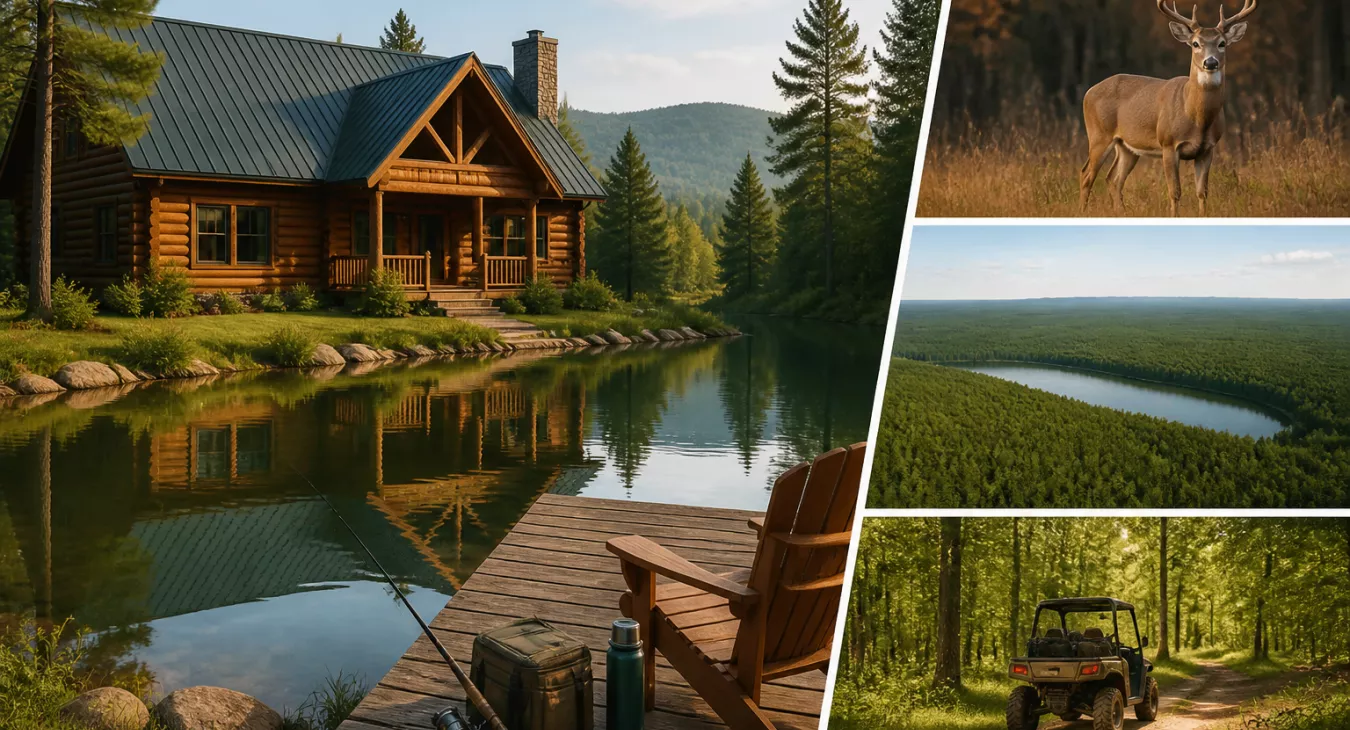
Discover how to profit from recreational land investing with hunting cabins and fishing properties. Learn valuation, income strategies, and tax tips for 20
Products and Tools Mentioned in this Post

Table of Contents
- Why Recreational Land Is Attracting Serious Investors in 2026
- Understanding Recreational Land Categories
- Evaluating Recreational Land: The Due Diligence Framework
- Hunting Lease Income: What the Numbers Actually Look Like
- Financing Recreational Land: What to Expect in 2026
- Land Values and Market Context
- Tax Considerations for Recreational Land Investors
- Managing Recreational Land Remotely
- Recreational Land vs. Other Alternative Real Estate Investments
- Common Mistakes Recreational Land Investors Make
- Conclusion: Building a Recreational Land Investment Strategy
- Frequently Asked Questions
Recreational land investing sits at the crossroads of financial strategy and personal passion. In 2026, it's drawing more serious capital than ever before. Raw land prices have surged approximately 86.5% since 2019 — and that's just the baseline. Properties with hunting cabins, fishing access, or premium wildlife habitat? They're commanding premium pricing. Better yet, they're generating lease income that traditional residential rentals simply can't touch. You want to know what separates the winners from the also-rans in this space? It's understanding timber quality, water features, wildlife corridors, and local zoning regs. Get those right, and recreational land delivers a compelling combination of appreciation, annual income, and personal use that few other asset classes even come close to matching. This guide walks through every stage: how to find and evaluate properties, how to structure income, how to finance the purchase, and how to manage the tax picture honestly.

Why Recreational Land Is Attracting Serious Investors in 2026
Recreational land isn't a niche hobby anymore. It's become a legitimate alternative investment category — and serious money is noticing.
Land prices are climbing faster than most investors expected. Realtor.com data shows median price per acre hit $62,365 in Q1 2026 — that's a 77% jump since 2019. And recreational land in overlooked regions? It's been crushing it. Upstate New York and Northern Michigan saw 25–40% appreciation since 2020 as remote work untethered buyers from city centers.
But here's what separates recreational land from warehouse deals or multifamily complexes.
You can actually use it yourself. While the land appreciates and throws off income, you're hunting, fishing, or retreating on your own asset. That psychological return — the lifestyle angle — is massive. Investors consistently undervalue it in their models. Sellers? They overshoot it in asking price every time. If you understand where that gap lives, you've got a real edge.
The income side has matured too. Hunting leases, fishing rights, timber contracts, short-term cabin rentals — they stack up. These revenue streams can meaningfully offset your carrying costs and turn what looks like a land hold into a cashflowing asset. Want to see how the numbers stack up against residential alternatives? Check this analysis of land vs. residential real estate investing returns, risk, and best use cases.
Back to topUnderstanding Recreational Land Categories

Not all recreational land is created equal. Your investment thesis changes entirely based on the primary use case — so you need to nail down exactly what you're buying before you can determine if the asking price makes sense.
Hunting Properties and Cabin Tracts
The Southeast, Midwest, and parts of the West see the biggest volume of hunting land transactions. We're talking timber tracts, agricultural edge parcels, CRP-enrolled fields, and food-plot-ready acreage. And here's the game-changer: throw in a cabin — even a basic one — and your tenant pool expands dramatically, along with what you can command for lease rates.
What actually moves the needle? Verified wildlife populations (think deer, turkey, waterfowl, elk). Habitat diversity matters too — hardwood mast production, water sources, travel corridors. Don't overlook road access, internal trail systems, or how close you are to public land boundaries. Existing structures count. Properties hitting most of these marks in high-demand states like Texas, Kansas, or Pennsylvania? They lease fast and appreciate steadily.
Fishing and Waterfront Properties
Water is scarce. River-front tracts, lake-access parcels, managed ponds — these occupy the premium tier for a reason. You can't manufacture a water feature, and you can't easily replicate it. That's genuine scarcity value right there. But here's where it gets tricky: fishing access rights, riparian boundaries, and — this is critical — water rights documentation vary wildly by state. Get a local attorney involved before you submit an offer.
Important note on water rights: The 17 prior-appropriation western states (Colorado, Arizona, New Mexico, Washington, Oregon, Idaho, and others) don't automatically transfer water rights with the deed. Texas groundwater has its own rulebook. Never assume water access follows the title. Hire a licensed water rights attorney to verify the specific jurisdiction's rules.
Mixed-Use Rural Tracts
Most recreational land deals are mixed-use by nature. Some pasture, some timber, some hunting ground. Maybe even agricultural income on the side. Multiple income streams reduce your risk, and many of these properties qualify for agricultural tax valuation programs — though the rules vary by state. Check with a local tax professional before you bank on any valuation savings in your underwriting.
If you've already worked raw land transactions, the guide on how to flip vacant land for profit walks you through acquisition pricing and exit strategy frameworks that work here too.
Back to topEvaluating Recreational Land: The Due Diligence Framework
Recreational land isn't residential or commercial property. The rulebook changes entirely. Physical characteristics drive value far more than comps ever will, and that's where most investors get burned — you're missing the municipal water, sewer, and utilities that residential deals take for granted. Price those gaps into your offer.
Access and Legal Ingress
Landlocked parcels sit in rural America right now, and some are actively marketed without so much as a mention of the access problem. You need documented legal access before you sign anything — a deeded easement or direct road frontage, both recorded in the chain of title. Get a surveyor and a real estate attorney to review this together. Most states require it.
Water Supply and Septic Feasibility
Building a cabin? You need water and a working septic or wastewater system. That's non-negotiable. Well drilling hinges on what the hydrogeology actually supports in your area, plus what the state allows. Here's the problem: Colorado, Arizona, New Mexico, Washington, Oregon, and Idaho all have exempt-well restrictions or closed basins. Domestic wells can become legally unavailable overnight in these regions.
Septic systems live or die on soil percolation or soil-profile classification testing — and this varies wildly by state. Virginia and Delaware use soil-profile classification instead of traditional perc tests. Test result validity? That expires on different schedules depending on your jurisdiction. Call the local health department first. Don't commission testing without knowing their requirements.
Timber and Natural Resource Inventory
A licensed forester will give you timber volume, species composition, and harvest potential. Even if you never cut a single tree, that timber cruise establishes your baseline carrying value. But here's what's changed — carbon credit programs and conservation easements now create real monetization pathways for timber and wildlife habitat. Lease rates and program terms shift constantly. Source these directly from current program administrators, not from averaged estimates you find online.
Zoning and Use Restrictions
"A-1" means something completely different in every county. You can't assume anything. Call the local planning department and ask exactly what uses are permitted by right, which ones need conditional use permits, and whether floodplain, conservation, or viewshed overlays affect your parcel. Don't trust the listing description — verify it independently.
If development potential is on the table, the best markets for land investing data-driven analysis for 2026 gives you a regional framework worth reviewing.
Back to topHunting Lease Income: What the Numbers Actually Look Like
Want the most reliable near-term cash flow from recreational land? Hunting leases are it. The market's matured enough that you can actually find transparent pricing data in most regions — but here's the catch: rates swing wildly depending on state, county, habitat quality, and what's actually on the property. Use any benchmark as your starting point for local research, not gospel.
As of 2026, national hunting lease rates span $5 to $50+ per acre annually. That enormous range comes down to location, how good the habitat actually is, and what infrastructure you've got. Take Texas Hill Country: a standard native deer lease typically runs $20–$30 per acre per year. Pennsylvania? Statewide averages land at $10–$30 per acre, though premium properties hit $30–$50+.
| Region / State | Hunting Lease Rate (per acre/year) | Notes | Source / As Of |
|---|---|---|---|
| National Range | $5–$50+ | Wide spread based on habitat, state, amenities | FRC, 2026 |
| Texas Hill Country | $20–$30 | Typical native deer lease rate | HuntLease, 2026 |
| Pennsylvania (statewide avg.) | $10–$30 | Premium properties reach $30–$50+/acre | HuntLease, 2025–2026 |
Let's run real numbers. A 200-acre tract leased at $20 per acre pulls in $4,000 yearly. Bump it to $30 per acre and you're at $6,000. On the surface? Neither looks like much. But here's where it matters: against a $150,000–$300,000 purchase price for similar-sized tracts across the Midwest and South, that lease income covers your property taxes, insurance, and maintenance while the land appreciates underneath. It's passive money that does real work.
And then there's the cabin factor. Add a livable cabin, utilities, and ATV trail access? You're suddenly commanding the top end of regional rates. Some operators go even further — they stack seasonal hunting leases with short-term vacation rental income during the off-season months. You need to understand how to layer these income streams. The framework in rental property cash flow: calculate real returns works directly for this kind of analysis.
Back to topFinancing Recreational Land: What to Expect in 2026
Here's the reality: financing recreational land isn't residential financing. If you walk into a lender expecting conventional mortgage terms, you'll get schooled fast. Raw land and recreational parcels sit in a higher-risk bucket, and lenders price accordingly.
Interest Rates and Down Payments
Right now in 2026, Farm Credit institutions and ag lenders are hitting you with 5.5%–7.5% fixed rates for qualified borrowers. And they want 20%–35% down. To put this in perspective, Q3 2025 data from the Fed showed farm real estate loan averages hit 6.80% in the Chicago Fed District and 7.41% in St. Louis — that's your baseline for tracking where this market's been.
But here's where it gets nuanced. A parcel with improvements (cabin, well, septic system) will get you better terms than raw, bare-bones acreage. Strong relationships with Farm Credit or existing ag lending history? You'll snag the competitive rates. Without them? Expect to pay for the privilege.
Lender Types and Programs
You've got options. Farm Credit System shops like AgriLending, AgFirst, and Farm Credit Mid-America dominate this space. Community banks with ag portfolios matter too. Then there's the USDA Farm Service Agency for qualifying buyers, and don't sleep on seller financing — it's still alive in rural markets and often beats what institutional lenders will offer.
Managing recreational properties across multiple states introduces complexity. That's why the framework in long-distance rental property investing: a complete system exists. If your cabin's three states away, this stuff matters.


Land Values and Market Context
Want to know if you're offering fair money? Understanding today's land values is essential. It's how you calibrate your offers and spot deal quality before you commit capital.
The USDA has given us solid 2025–2026 benchmarks. Farmland hit $4,350 per acre nationally, while pastureland came in at $1,920 per acre — that's roughly a 5% year-over-year bump. Raw undeveloped rural land (no buildings, no improvements) traded between $1,500 and $2,500 per acre in 2025–2026. But here's the thing: that national number hides massive regional differences. What matters is your market.
The Fed's Tenth District — that's Colorado, Kansas, Nebraska, Oklahoma, Wyoming, plus chunks of New Mexico and Missouri — saw ranchland prices jump 11% year over year through Q1 2026. And recreational land? It posted 1.9% growth for all of 2025, landing it in the top tier of land sectors per NAR and RLI data.
Recreational land isn't sitting on the sidelines. It's riding the same wave as everything else in the land market — and that's exactly where your edge is. Dig into regional fundamentals, find the submarkets where recreational acreage still trades at a discount to its income and lifestyle upside, and you'll have your deal.
Back to topTax Considerations for Recreational Land Investors
Look, the tax situation for recreational land gets messy fast. And this is one area where you really do need a CPA who actually understands ag property and rural deals — not just someone who files your basic return. There are federal provisions worth understanding though, and they can move the needle on your bottom line.
Depreciation on Improvements
Here's the hard limit: raw land doesn't depreciate under IRS rules. The improvements, though? Cabins, barns, equipment storage structures, road systems, fencing — those all qualify. And several favorable provisions apply to them.
For 2026, the IRS Section 179 maximum deduction hits $2,560,000. The phase-out kicks in at $4,090,000 in property placed in service, fully phased out at $6,650,000. For most individual recreational land investors? Section 179 mainly matters for equipment — ATVs, tractors, food plot implements. Not the land itself.
But bonus depreciation is the real play. After January 19, 2025, qualified property gets something special: the One Big Beautiful Budget Act (OBBBA) permanently restored 100% bonus depreciation (IRS Notice 2026-11, dated January 14, 2026). This means you could deduct the full cost of qualifying improvements in year one instead of spreading depreciation over years. Cabin construction, road improvements, certain land upgrades might qualify. But each expenditure needs tax professional review to nail the classification.
State-Level Agricultural Tax Programs
Many states hand out preferential property tax valuations for agricultural, timber, or wildlife management land. The catch? They're all different. Tennessee uses "Greenbelt" designation under state statute. California's Williamson Act works as a contractual agreement rather than an exemption. Texas has its own wildlife management valuation with specific application and annual activity requirements. Florida, South Carolina — they each wrote their own rules.
Here's what kills deals: Most of these programs include rollback tax provisions. You lose your qualifying status? Back taxes plus interest get assessed. The lookback period varies by state. Never, ever assume you'll qualify or maintain an agricultural tax designation without talking to a local tax professional who specializes in ag property. It's not worth the surprise bill.
Passive Activity and Hobby Loss Rules
The IRS watches recreational land operations like a hawk. They're specifically looking for hobby loss classification under IRC Section 183. If your property is mostly for personal recreation and consistently loses money, they'll disallow those losses as hobby expenses. You need documentation of genuine profit motive — hunting lease agreements, recorded income, business-like records. Your operation structure matters too. Schedule F farm treatment versus Schedule E rental activity? That's the difference between protecting your deductions and losing them.
Back to topManaging Recreational Land Remotely
Most recreational land investors don't live on their properties. So how do you actually manage something you can't drive by every week? You'll need a solid local network: a property caretaker or farm manager, a trustworthy wildlife consultant for habitat work, and a real tenant screening process for hunting leases.
Get an attorney involved when drafting hunting lease agreements — specifically someone who knows your state's landlord-tenant laws and recreational use statutes inside and out. Here's the thing: many states offer recreational use immunity, which limits your liability when you open land for hunting or fishing. But these protections vary wildly by jurisdiction. Some have conditions. Some have exclusions that'll bite you if you're not careful. Adequate liability insurance isn't optional — it's your safety net regardless of what the statute says.
And here's where most recreational investors get stuck. If you're used to managing residential or multifamily properties with Buildium or similar platforms, forget it — they're not built for this. Leases are seasonal. Tenant relationships are informal. Compliance is a completely different animal. The Buildium review for 2026 shows how software streamlines residential landlord operations. You'll probably need supplementary tools or manual systems to handle hunting-specific lease management effectively.
Then there's habitat management itself. Food plot planting. Timber stand improvement. Water feature maintenance. These tasks demand either your time or hired labor — and both cost money. Build these expenses into your annual operating budget right from day one, not later. Investors who guess at ongoing land management costs? They watch their returns compress faster than they expected.
Back to topRecreational Land vs. Other Alternative Real Estate Investments
Before you dump capital into recreational land, you need to see how it stacks up against other alternative strategies. The reality? It's different from mobile home investing or multifamily investing in meaningful ways. You won't see the monthly cash flow you'd get from units or homes. But you'll get stronger long-term appreciation. Plus personal use value. And tenant management? It's nearly nonexistent. Then there's the comparison to REITs or indirect real estate vehicles — those are hands-off, sure, but you're trading direct control and full ownership of a tangible, finite asset for liquidity you probably don't need.
Here's the real play: stop thinking of recreational land as an alternative to residential real estate. Think of it as a portfolio complement. It gives you non-correlated appreciation when your residential stuff flatlines. You get lifestyle optionality — actually use the land yourself. And it's a legitimate inflation hedge that more liquid assets won't touch. Want the full picture? Check out real estate investing without buying property to understand where direct ownership actually sits in the alternatives market.
Back to topCommon Mistakes Recreational Land Investors Make
Your residential or commercial experience won't translate directly to recreational land investing. These are the mistakes we see over and over—and they're killers to your bottom line.
- Overpaying for lifestyle premium: That stunning view, world-class elk herd, or trophy trout stream? It'll cost you. Emotional premiums on these properties destroy returns fast. Before you let the personal appeal drive your offer, run the income analysis with real discipline.
- Ignoring access rights: Just because there's a road on the ground doesn't mean you own the right to use it. A landlocked parcel with informal access becomes worthless the second your neighbor changes. Verify legal ingress in the title documents—don't skip this step.
- Underestimating infrastructure costs: A well, septic system, electric service extension, and basic cabin run $100,000 or more easily. And that's before you collect your first hunting lease payment. Get actual contractor estimates for every improvement you'll need before closing.
- Misunderstanding water rights: In western states, this kills deals. You can't assume you can pump water for irrigation, stock ponds, or cabin use without understanding the water rights attached to the parcel. Get this wrong and your property value drops dramatically.
- Neglecting exit strategy: Recreational land is illiquid—period. The buyer pool is tiny compared to residential, and market conditions shift. Know your realistic exit timeline before you buy, not after.
Conclusion: Building a Recreational Land Investment Strategy
Recreational land investing delivers something different. Hunting cabins, fishing properties, wildlife habitat tracts — they all offer long-term appreciation backed by real market data, income through hunting leases and short-term rentals, personal use optionality, and inflation-resistant tangible asset ownership. The numbers don't lie: raw land prices are up approximately 86.5% since 2019, with recreational land specifically growing at 1.9% in 2025 among the top land market sectors.
But here's where most investors stumble. Success requires discipline. Emotionally appealing properties make that hard. The winners are the ones who run rigorous due diligence on access, water, infrastructure, and zoning. They stress-test income projections against realistic lease rates and carrying costs. They build a local network of professionals — forester, attorney, caretaker, tax advisor. Those investors? They find recreational land rewarding in a diversified real estate portfolio. The rest? It becomes an expensive hobby.
Let lifestyle enthusiasm drive your underwriting and you'll pay dearly for it.
Whether you're evaluating your first hunting tract or adding a fishing property to an existing land portfolio, the fundamental discipline stays the same: understand exactly what you're buying, price it honestly, and have a clear plan for how it earns its place in your portfolio. Start with the rental property investing for beginners complete 2026 guide for essential real estate investment principles that apply across every asset class.
Back to topFrequently Asked Questions
what's a realistic annual return on a hunting cabin property?
It depends. Purchase price, location, and your income strategy matter most. A hunting lease alone—typically $5–$50+ per acre annually at national rates—might just cover your property taxes and insurance if you buy smart. Appreciation is where the real money compounds over time. But add short-term cabin rentals? That's when your cash flow gets serious. Just don't ignore the math: factor in management costs, vacancy rates, and brutal seasonality swings. There's no magic national benchmark here. Model your specific deal using local lease comps and actual carrying costs.
Do I need a real estate license to buy and lease hunting land?
No license required if you're buying for yourself and leasing to hunters as the property owner. That's straightforward. But here's where it gets sticky: if you're acting as a broker or agent finding deals for clients or negotiating leases for a fee, you need a license—and requirements vary by state. And if you're already licensed, make sure your E&O policy covers land transactions. Some carriers exclude vacant or agricultural land entirely. That gap will kill you in a lawsuit.
How does bonus depreciation apply to a hunting cabin I build on my land?
The OBBBA made a big move. For qualified property acquired after January 19, 2025, 100% bonus depreciation is permanently restored. This means you can potentially deduct the entire cabin cost in year one. But don't get ahead of yourself. How each cost gets classified—whether it's depreciable property, how MACRS bucketing works, whether your entity structure protects you from hobby loss disqualification—that's all detail work that demands a tax pro who actually knows agricultural and rural property. The land itself? Never depreciable. Period.
Can I finance a hunting cabin property with a conventional mortgage?
Forget Fannie Mae and Freddie Mac for raw recreational land. They won't touch it. Your real lenders are Farm Credit System shops and agricultural community banks. As of 2026, expect fixed rates between 5.5%–7.5% for qualified borrowers, with 20%–35% down being the norm. Seller financing is also surprisingly common in rural markets and often comes with terms way more flexible than any bank will offer. Here's the reality: if the land already has a cabin, well, and septic, you'll get better terms. Raw dirt? You'll pay for the risk.
What insurance do I need for a recreational land property with a hunting cabin?
At minimum, grab a landlord or farm property policy on the structure and a general liability policy to cover claims from tenant activity. Many states have recreational use statutes that cap your liability when land is open for free recreation, but don't rely on that shield alone. Those protections have conditions and gaps. Short-term cabin rentals? You'll likely need a separate short-term rental endorsement or a commercial hospitality policy entirely. Talk to a licensed broker who actually understands agricultural and rural property in your state. Don't guess on this one.
Back to top