

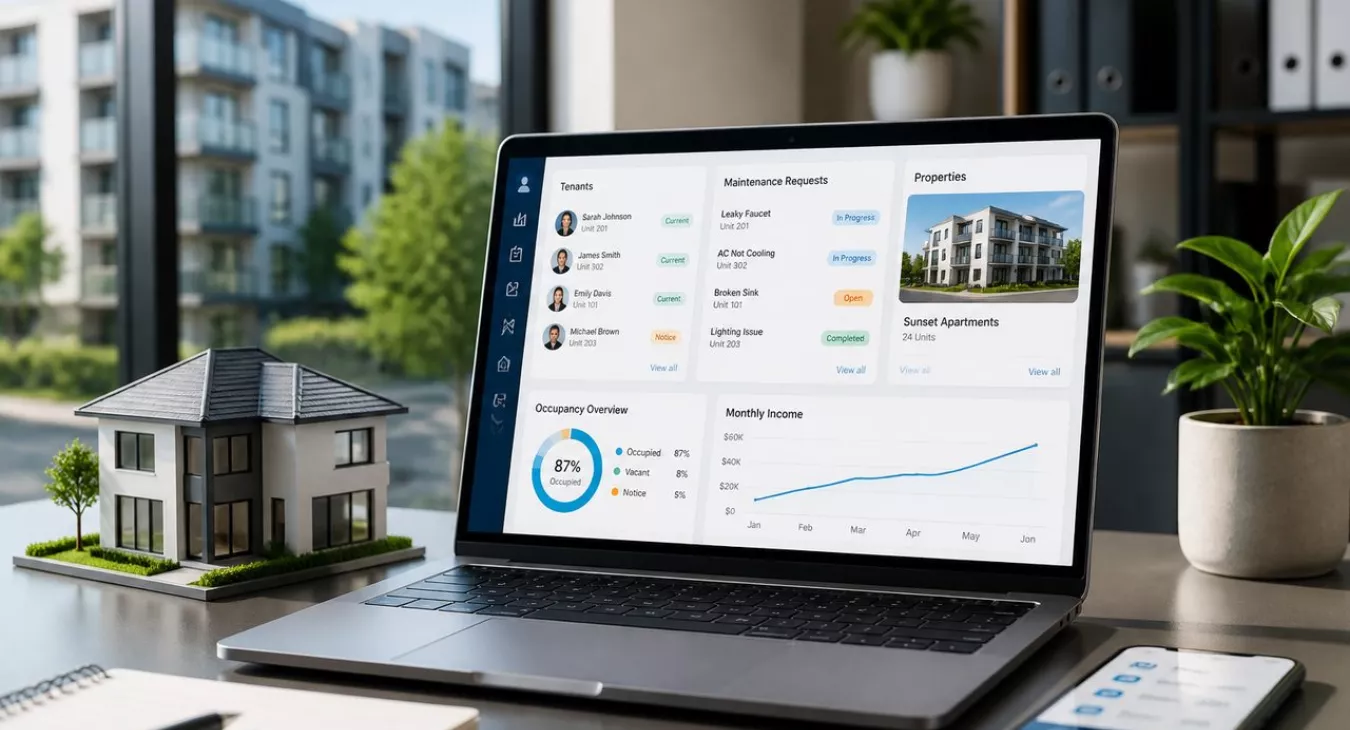
Find the best CRM for real estate property managers. Compare top platforms for tenant tracking, maintenance management, and streamlined leasing workflows.
Products and Tools Mentioned in this Post


Rent Manager
Rent Manager is a powerful property management software platform for real estate investors. Manage tenants, maintenance, accounting, and reporting all in one place.
TenantCloud
TenantCloud offers landlords and property managers a complete solution for rent collection, tenant screening, lease management, and maintenance tracking.
Contactually
Contactually is a real-estate-ready CRM with list building, skip tracing, calling, texting, automated follow-up, project management and websites under one login.
Table of Contents
- what's a CRM for Real Estate Property Managers?
- Why Property Managers Need a CRM
- Key Features of Property Management CRMs
- Benefits of Using a Property Management CRM
- Top Property Management CRM Platforms in 2026
- How to Choose the Right CRM for Your Property Management Business
- CRM Features Checklist: Essential vs. Nice-to-Have
- Common Challenges When Implementing a Property Management CRM
Managing rental properties without a dedicated CRM is like running a leasing office with a whiteboard and sticky notes — technically possible, but painfully inefficient at scale. The winners in a $134.2 billion U.S. property management industry with 875,000 workers share one thing in common: they respond faster, follow up consistently, and make decisions based on actual data. A purpose-built CRM for property managers does the heavy lifting. It centralizes tenant data, automates your follow-up sequences, tracks every lead from first inquiry straight through to signed lease, and gives you portfolio-level visibility that spreadsheets simply can't deliver. Managing 50 units or 5,000? This guide walks you through finding the right platform, sidestepping expensive implementation mistakes, and building workflows your team will actually use.
New to long-term rental? Start with our Long-Term Rental Investing Guide.

what's a CRM for Real Estate Property Managers?
Definition and Core Purpose
A CRM (Customer Relationship Management) system tracks every relationship your business has with prospects, applicants, tenants, and vendors. From initial inquiry through lease signing, renewal, and move-out — it's all there. Unlike a general sales CRM, a property management CRM orbits around the actual leasing pipeline: units, availability dates, showing appointments, application status, and resident communication history live in one organized system.
Here's the reality: no lead falls through the cracks. No follow-up gets forgotten. No tenant communication gets lost in someone's personal email inbox. You're dealing with 14 rental applications received per lease signed (2025 data). Try managing that volume manually and you'll hemorrhage opportunities.
How It Differs from General CRM Software
Salesforce and generic HubSpot pipelines? Built for B2B sales cycles. They track company accounts, deal stages, sales reps. But they're dumb about the things that matter to you: unit availability, lease dates, maintenance tickets, move-in/move-out workflows.
A property management CRM speaks your language. It understands that a contact might be an active tenant in Unit 4B and a prospective applicant for Unit 7A across town at the same time.
How It Differs from Traditional Property Management Software
This is where the confusion starts. Traditional property management software platforms like AppFolio or Yardi manage tens of millions of units. They're accounting and operations engines — rent collection, maintenance work orders, owner statements, financial reporting. Excellent at those things.
But there's a hole. Most PMS platforms fall flat on prospecting and lead nurturing. They don't own the front-end of your leasing funnel — the part that happens before someone becomes a verified applicant.
A purpose-built CRM fills that gap. The smartest operators run both: PMS handling back-end ops, CRM handling front-end relationships. Some all-in-one platforms try to do both, though the execution varies. For a deeper comparison of investor-focused tools, check out our guide to the best CRM for real estate investors in 2026.
Back to topWhy Property Managers Need a CRM

Common Challenges Without a CRM
You're running a property management team without a CRM. Here's what that actually looks like: leads flood in from Zillow, Apartments.com, your website, walk-ins. They end up everywhere — spreadsheets, email threads, your leasing agent's personal phone contacts. Then that agent takes a sick day or gets a better offer somewhere else. Gone. And they take every prospect relationship with them.
This gets expensive fast. Prospective tenants don't wait around. No callback within hours? They're already touring the next unit. Your team's fragmented too — same prospect gets called by two different people, or worse, they hear conflicting info about what's available. You've got no visibility into which channels actually produce your best applicants because there's no single source of truth tracking any of it.
Impact on Leasing Velocity and Occupancy Rates
The U.S. national rental vacancy rate hit 7.3% in Q2 2026. But that's misleading. The South's sitting at 9.5% vacancy while the West's only at 5.3%. Regional markets move differently. In tight supply markets, whoever responds first wins. In soft markets, you need consistent nurturing across a bigger pipeline just to stay competitive.
And it costs you money every single day. The average vacant unit sits empty for 20 days before being filled. That's lost revenue. A CRM changes the math — it sends automatic responses, gets tours scheduled immediately, keeps prospects engaged through the application process. You compress that vacancy window. How much is that worth to your bottom line?
Operational Efficiency Gains
But it's not just about leasing speed. A CRM handles the backend work too — maintenance coordination, lease renewals, vendor management. More than 80% of property managers are hands-on with maintenance or rent collection. That's almost your entire team. Automating renewal reminders and maintenance updates frees them up for what actually matters — solving complex problems, keeping owners happy, growing your portfolio. And that's where real margins happen.
Back to topKey Features of Property Management CRMs

Lead Management and Prospecting Tools
Centralized lead capture. That's the foundation. You're pulling inquiries from ILS listings, your website, chatbots, phone calls — everywhere — and dumping them into a single database where contact records get created automatically and routed to the right leasing agent or pipeline stage. This is where most property managers still leak money. Look for duplicate detection so you're not chasing the same prospect twice, lead source tracking to see which channels actually convert, and the ability to tag contacts by property, unit type, and move-in date.
Automated Communication and Workflows
Here's where you actually see ROI. A configured system sends an instant acknowledgment the second a prospect hits submit. Twenty-four hours later, if they've gone silent, another email hits their inbox. Showing reminders go out automatically. Leads that go cold after a set number of days? They escalate to a manager without anyone lifting a finger. And it doesn't stop at email — multi-channel automation covers SMS, voicemail drops, everything. Your prospects get consistent outreach whether it's Tuesday morning or Saturday night. But here's the catch: SMS carries TCPA compliance obligations you can't ignore. Talk to your legal team before deploying automated text campaigns to cold prospects, and make sure proper A2P 10DLC carrier registration is locked in.
Tour Scheduling and Calendar Management
Self-scheduling tours from a showing link eliminates that painful phone tag that kills conversions. The best systems sync with your team calendars, automatically block off unavailable times, and send reminders to both prospect and leasing agent. Some platforms now integrate immersive 3D tour software so prospects can explore a unit before they ever step foot on the property.
Pipeline and Performance Reporting
Portfolio-level visibility separates a real CRM from a glorified contact list. You need dashboards showing leads by stage, conversion rates at each pipeline step, average days to lease, and lead volume broken down by source. Running multiple properties? Filter and benchmark performance by property, manager, or market to spot where your process is breaking down and which marketing spend is actually paying off.
AI-Powered Leasing Assistance
AI isn't a luxury anymore. It's becoming standard. AI leasing agents work 24/7 — answering availability questions, qualifying prospects against income requirements, scheduling tours — without your team touching a thing. Platforms like Aptly and Funnel Leasing have built their entire architecture around this. The payoff? Your team wakes up to a calendar of pre-qualified, pre-scheduled tours instead of a pile of unanswered inquiries.
Integration Capabilities
A CRM that doesn't talk to your other software just creates new data silos instead of killing them. At minimum you need native integrations or solid API connections with your property management software, accounting platform, and marketing channels. For accounting specifically, our best real estate accounting software guide breaks down the leading platforms and their integration ecosystems.
Mobile Access for On-the-Go Teams
Your leasing agents are in the field constantly — running tours, inspecting units, meeting with vendors. Mobile CRM access isn't optional. It's baseline. You want native iOS and Android apps that handle full contact management, communication logging, and task management. Read-only dashboards aren't enough.
Back to topBenefits of Using a Property Management CRM

Increased Leasing Velocity
Automated instant responses, self-scheduling, and consistent follow-up sequences compress the time from inquiry to signed lease. Every single day you save in the leasing cycle is a day of rent actually hitting your account instead of sitting vacant. That's real money.
Higher Occupancy Rates
Your CRM manages renewal outreach 60–90 days before lease expiration. Result? Fewer residents slip out the door without you having time to backfill the unit. Proactive renewal campaigns running on autopilot directly support your occupancy rate targets — no guesswork required.
Improved Team Productivity
And here's where it gets efficient. Showing confirmations, application status updates, move-in checklists — all the routine communications that used to require manual grind. They run on autopilot now. You multiply the effective capacity of every leasing agent without hiring additional headcount.
Better Tenant Satisfaction
Prospects and tenants notice prompt, consistent communication. A CRM ensures that every contact gets the same quality experience regardless of whether it's 9 a.m. Tuesday or 11 p.m. Saturday, whether you're fully staffed or running lean. That consistency is a real differentiator in competitive rental markets.
Data-Driven Decision Making
This is where the real power kicks in. When every lead interaction is logged and every conversion gets tracked, you answer questions that pure gut-feel management can't touch. Which ILS actually generates the highest-quality leads? Who's your best leasing agent by tour-to-application conversion rate? Where are prospects dropping off in your application funnel?
These insights drive marketing budget allocation and operational improvements. You're not guessing anymore.
Scalability Across Properties
Approximately 35% of U.S. property managers handle between 101 and 500 units. Scaling without proportionally scaling headcount isn't optional — it's a core business requirement. A CRM workflow that processes 50 leads handles 500 with equal consistency. That's your competitive edge right there.
Back to topTop Property Management CRM Platforms in 2026

You're looking at a real cross-section of the market here — everything from purpose-built leasing CRMs to full-stack property management platforms with actual CRM depth built in. Here's the reality: there's no universal winner. What works for a 200-unit residential portfolio won't work for a scattered-site SFR operator, and what a property management company needs differs sharply from what an independent landlord needs. Your choice hinges on portfolio size, property type, team structure, and what else you're already running. For context: MRI Software manages 15.6 million units, Yardi sits at 15 million, AppFolio's at 9.5 million, and RealPage's combined portfolio (OneSite, Buildium, Propertyware) tracks roughly 9 million units as of July 2026. Those numbers tell you where the scale players are.
| Platform | Best For | Starting Price (2026) | CRM Strength | Key Limitation |
|---|---|---|---|---|
| AppFolio | Mid-to-large residential portfolios (50+ units) | $1.49/unit/month ($298/mo min) | Integrated leasing pipeline, AI leasing assistant | High minimum commitment; pricing scales steeply |
| Buildium | Small to mid-size portfolios (up to 150 units to start) | $62/month (Essential) | Lead tracking, tenant portal, maintenance workflows | CRM features less strong than dedicated platforms |
| LeadSimple | Property managers focused on process-driven leasing | $99/month base; Operations add-on $1.35/door/month ($200 min) | Purpose-built for PM pipelines; strong automation | Not a full PMS; requires integration with accounting software |
| Propertyware | Single-family rental operators | $1.00/unit/month ($250/mo min) | Lead tracking, owner portal, maintenance coordination | Less intuitive UI; steeper learning curve |
| TenantCloud | Independent landlords and small portfolios | $25/month (or $15/mo billed annually) | Basic tenant management, messaging, maintenance | Limited automation and reporting at lower tiers |
| DoorLoop | Growing portfolios wanting all-in-one simplicity | $69/month (scales with units) | Modern UI, lead management, automation features | Newer platform; integration depth still maturing |
| Contactually | Real estate operators wanting broad outreach automation | See contactually.net for current pricing | All-in-one: pipelines, texting, calling, email, funnels, workflows, social posting | Not a dedicated PMS; usage (calls, texts, minutes) billed separately; no free tier |
| Knock / Funnel Leasing / Aptly | Multifamily operators at scale; AI-first leasing | Custom enterprise pricing | AI leasing agents, centralized lead management, performance analytics | Enterprise focus; pricing and setup complexity not suited for small portfolios |
AppFolio — Best for Mid-to-Large Residential Portfolios
AppFolio's come a long way. It's no longer just accounting software — it's got a real CRM layer now. The AI leasing assistant picks up initial inquiries, and you get a leasing pipeline that tracks every prospect from click to signed lease. The platform's running approximately 9.5 million units as of July 2026. Pricing? $1.49 per unit per month on Core (with $298 minimum and 50-unit floor). Step up to Plus, and you're at $3.00–$3.50 per unit per month. The Max plan hits roughly $5.00 per unit per month with monthly minimums between $1,500 and $7,500. This is your play if you want one system handling both operations and leasing without switching tabs.
Buildium — Best All-in-One for Smaller Portfolios
Want to get into structured software without breaking the bank? Buildium's still one of the easiest doors in. Essential runs $62 a month for up to 150 units. Growth jumps to $192/month. Premium sits at $400/month. The CRM stuff — lead tracking, tenant messaging, maintenance requests — works fine. It's just not as stripped-down for leasing as a dedicated CRM platform. And that's okay. If you're a property manager who needs one platform handling accounting, tenants, and basic lead capture, Buildium's value per dollar is hard to beat.
LeadSimple — Best for Process-Driven Property Managers
This one's built specifically for PM companies that want to nail their leasing and operations workflows. Visual pipelines, automated follow-up sequences, and conversion tracking designed for property management — not bolted onto some generic sales CRM. $99/month base, with an optional Operations add-on at $1.35 per door per month ($200 minimum) targets growth-oriented PM companies, not solo landlords. The catch? It's not a full PMS. You'll need to plug it into AppFolio, Buildium, or Rent Manager for accounting and operations. But if systemizing your leasing funnel matters more than having everything under one roof, LeadSimple does it better.
Propertyware — Best for Single-Family Rental Operators
Built specifically for SFR. Pricing scales per unit: $1.00/unit/month on Basic ($250 min), $1.50/unit/month on Plus ($350 min), $2.00/unit/month on Premium ($450 min). Lead tracking, maintenance coordination, owner reporting, tenant comms — all in one place. The interface won't win design awards, but if you're managing 40 scattered doors across the metro and need a purpose-built system for that workflow, Propertyware gets it.
Contactually — Best for Outreach-Driven Property Management Businesses
Disclosure: KDS, the publisher of this site, teamed up to create Contactually.
Contactually is something different — an all-in-one real estate CRM. It bundles list building, skip tracing, project management, two-way texting, outbound calling, email, funnel and website creation, pipeline management, automated workflows, and social media posting. All in one platform. If your property management business runs active lead gen — prospecting for new owner clients, managing referral pipelines, orchestrating multi-channel marketing campaigns — Contactually's breadth in outreach is a legitimate advantage. Here's what matters: usage costs (calls, minutes, texts) stack on top of your plan fee, there's no free tier, and this isn't a dedicated property management platform. If you need deep maintenance ticketing, accounting integration, or unit-level P&L reporting, you'll need other tools running alongside it. On the CRM and workflow side, it competes most directly with LeadSimple, though purpose-built investor platforms might edge deeper on investor-specific features like list stacking.
AI-First Platforms: Aptly, Knock, Funnel Leasing
A new tier's emerging for large multifamily shops. These platforms sit between traditional CRM and PMS — and they're AI-first. Aptly focuses on AI-powered resident communication and leasing automation. Knock handles leasing team performance management. Funnel Leasing centralizes leads from multiple ILS sources and runs AI agents that work around the clock on prospect conversations. These aren't for everyone. Pricing is custom enterprise only, and they're really only appropriate if you're pushing several hundred units or more. But at scale? The automation and analytics capabilities blow general-purpose platforms out of the water. Contact the vendors directly to see what your deal looks like.
Back to topHow to Choose the Right CRM for Your Property Management Business

Assess Your Portfolio Size and Complexity
Start here: portfolio size. Under 50 units means you don't need enterprise bloat. TenantCloud or Buildium Essential give you the structure you need without the monthly bleeding. Got 50–500 units? That's where most of the decision-making actually matters. Buildium Growth/Premium, AppFolio Core, and LeadSimple with an integrated PMS hit that sweet spot between capability and cost. And roughly 35% of property managers handle 101–500 units — which means you're in the segment with the widest range of options, but also the most work to sort through. Over 500 units? AppFolio Plus/Max, Entrata, or platforms like Knock and Funnel Leasing are built for scale. You need reporting depth and infrastructure that smaller systems just can't deliver.
Match the Platform to Your Property Type
SFR and multifamily operations are fundamentally different. Single-family rental portfolios scatter across geography, demand more owner reporting, and coordinate maintenance in ways that apartment communities don't. That's why Propertyware and DoorLoop were built with SFR in mind. Multifamily's a different beast entirely. You've got centralized leasing offices, bulk tenant intake, and specific operational workflows. AppFolio, Entrata, Funnel Leasing, and Knock understand this. They're built for apartment communities, not scattered houses.
Evaluate Must-Have vs. Nice-to-Have Features
Before you take a single demo, write down your feature list. Three buckets: must-haves (deal-breakers if they're missing), important (you'll use these regularly), and nice-to-haves (would be cool, but not essential). Lead capture from multiple sources, automated follow-up, mobile access, and maintenance tracking? Those are table stakes for most operators. AI leasing agents, portfolio analytics, owner portals — those land in the important or nice-to-have category depending on your actual workflow.
Consider Total Cost of Ownership
Property management CRMs typically run $10–$30 per user per month for general platforms, or $1–$5 per unit per month for property-specific solutions, with advanced platforms hitting $60–$150 monthly (2026 estimate). But that sticker price? It's misleading. Add onboarding fees, data migration costs, per-user add-ons, usage-based charges for calls and texts and storage, integration costs with your existing systems. A platform that looks cheap at the plan level becomes expensive fast once everything's bundled in.
Verify Integration Compatibility
Map your tech stack before you sign anything. QuickBooks for accounting. Third-party work order system for maintenance. Zillow and Apartments.com for listings. Confirm each integration is native — not some paid Zapier workaround that'll break when the vendor updates their API. Building from scratch? Our guide to the best real estate investor CRMs in 2026 covers both the investment side and property management tools in one place.
Plan for Training and Adoption
A CRM's only as good as adoption. Your team has to actually use it. Before the contract gets signed, dig into the vendor's onboarding support. Do they have video libraries? Live training sessions? Real help docs or just a knowledge base dump? Ask how long typical users take to become productive. Does the vendor assign a dedicated implementation person, or do they hand you a password and disappear?
Back to topCRM Features Checklist: Essential vs. Nice-to-Have
| Feature | Priority Level | Implementation Complexity | ROI Impact |
|---|---|---|---|
| Centralized lead capture (multi-source) | Essential | Low–Medium | High — eliminates missed leads |
| Automated email/SMS follow-up sequences | Essential | Medium | High — directly improves conversion rates |
| Pipeline stage tracking | Essential | Low | High — visibility into leasing funnel |
| Mobile app (iOS and Android) | Essential | Low (setup) | Medium–High — field team productivity |
| Maintenance request tracking | Essential for PMs | Medium | High — tenant satisfaction and retention |
| Self-scheduling tour links | Important | Low–Medium | Medium–High — reduces leasing cycle time |
| Lease renewal automation | Important | Medium | High — reduces vacancy from preventable turnover |
| Lead source reporting and marketing ROI tracking | Important | Medium | Medium — informs marketing budget decisions |
| AI leasing agent / chatbot | Nice-to-Have (Essential at scale) | Medium–High | High for high-volume operations |
| Owner portal and reporting | Important for third-party PMs | Medium | High — owner retention and satisfaction |
| Portfolio-level analytics dashboard | Nice-to-Have for small portfolios | Low (setup) | High for multi-property operators |
| Integration with ILS platforms | Important | Medium | Medium — centralized lead source management |
Common Challenges When Implementing a Property Management CRM

Change Management and Team Resistance
Here's the truth: most CRM implementations tank because of people, not software. Your leasing agents have spent years running their pipeline through email and personal phone contacts. They see a new system as extra work, not a productivity win. So what actually works? Bring them into the selection process. Show them workflows that'll cut their admin time by 5–10 hours a week. Then tie adoption directly to their lead-to-lease conversion rate — the metric they actually care about hitting.
And here's the game-changer: pick a CRM champion. Usually a senior leasing agent or ops manager who gets deep training and owns adoption. They become your first line of defense for questions and troubleshooting, which means your team stops depending on the vendor for every little hiccup. Does this one person make a difference? Absolutely. Implementation success rates jump dramatically when you have that internal advocate.
Data Migration and Historical Records
You'll underestimate this one. Migrating tenant records, lease history, and prospect data from spreadsheets or some legacy system is grueling work — and most teams don't budget enough time for it. Before you touch migration, audit everything. Are phone numbers standardized? Do you have duplicate contacts sitting in there? Define your contact categories (prospect, applicant, active tenant, past tenant) and stick to it. Garbage data goes in, garbage insights come out. Your team loses faith in the system on day one, and you're done.
For portfolios with 500+ units or more, run a phased migration instead. Start with active prospects and current tenants. Get the core system humming and let your team get comfortable. Then layer in the historical records once everyone's confident.
Integration Complexities with Legacy Systems
Most property management shops run on a patchwork: legacy accounting software, spreadsheet maintenance tracking, manual owner reporting that's accumulated over years. That new CRM you demoed? It's going to bump into incompatibilities you never saw during the sales pitch. Build integration testing into your timeline. Real testing. Don't assume an "integration" works until you've run actual data flows through it in a sandbox environment. This single step catches 80% of gotchas before they hit production.
Learning Curve and Training Requirements
Even solid platforms have a real learning curve. Budget for it. Initial training, yes — but also ongoing refreshers as features roll out or workflows shift. The platforms that deliver fast competency? They offer role-based training. Separate tracks for leasing agents, maintenance coordinators, and management. One-size-fits-all training wastes everyone's time and kills adoption speed.
Setting Realistic ROI Expectations
ROI doesn't hit on day one. The real timeline is messy. Weeks 1–4 are setup and training — your productivity dips below baseline. Then months 2–3
Back to top